
MLS Photo Requirements: What Actually Gets Your Photos Rejected
The file side: mostly your photographer's problem, not yours
In day-to-day practice, uploads rarely fail on technical grounds. If your photographer hands you JPEGs that are already sized for listing use, you drag them in and the system takes them. The pixel minimums and file-size caps published by individual boards exist, they vary between boards, and they change. That is exactly why you should not be managing them. Ask your photographer to deliver MLS-ready files and the question disappears.
What we deliver as standard: JPEG, sRGB, sized and named for direct upload, with a separate social-sized set in the same hand-off. No resizing on your end.
What is consistent across essentially every MLS in the country, and worth knowing:
Landscape orientation. Portrait photos get cropped badly in listing grids, and some systems reject them outright. Interiors should be shot horizontally.
No watermarks, logos or borders on the primary photo. Many MLSs prohibit branding on any photo. This is the single most common reason a photographer's files get rejected: they watermark their own work by habit.
No text overlays. No "PRICE REDUCED", no "COMING SOON" burned into the image.
The first photo must be the exterior front of the property. Not the kitchen, not the pool, even when they are the stronger shot. Some systems enforce this automatically.
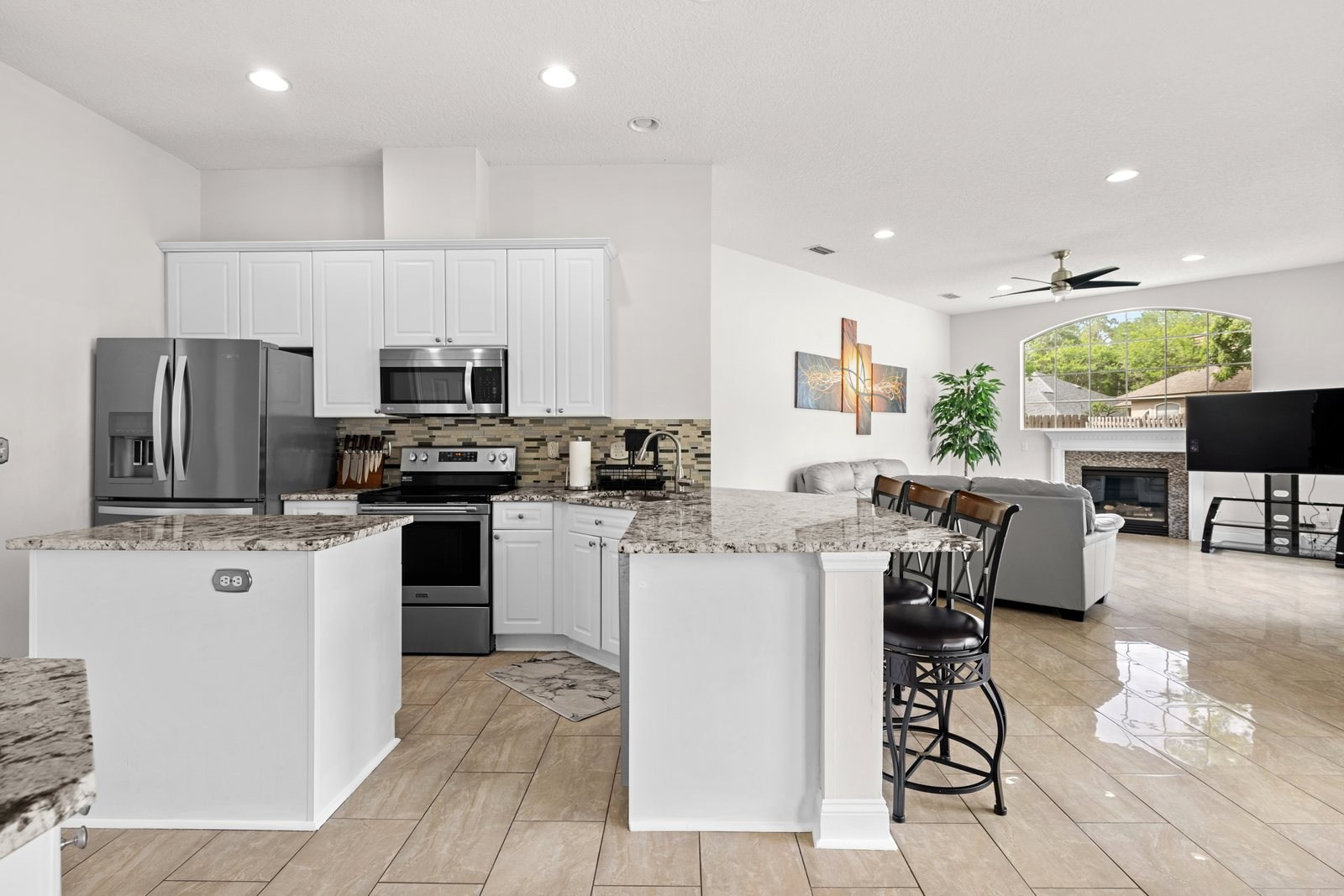
Verticals straight, colour neutral, sized for direct upload
The rules that actually cause problems
These are the ones worth a glance before you upload. In practice they come up rarely, but when a listing does get flagged, it is almost always for something on this list rather than for a number in a spec sheet.
People in the photos, including the agent, the sellers, and the sellers' children. Fair housing exposure, straightforwardly. Photos must show the property, not who lives in it or who might.
Religious or personal items in the frame. Also fair housing. A crucifix on a wall or family photographs on a mantel are routine reasons for a flag in some markets. A good photographer composes around them without being asked, or suggests removing them before the shoot.
Pets. Same reason, and also just distracting.
Signs, including your own. A "For Sale" sign in the yard in the exterior photo gets flagged in many MLSs.
Photos of anything that is not being sold. The community pool, the neighbourhood sign, a nearby beach, a stock sunset. If it does not convey with the property, it generally cannot be a listing photo, and in most systems amenity and community images need to be clearly identified as such rather than presented as the property.
Mirror and window reflections showing the photographer. Common in bathrooms. Should be edited out, and frequently is not.
Virtual staging that is not disclosed. This is becoming the big one. Digitally furnishing an empty room is completely legitimate and widely used, but it must be disclosed, usually with a label on the image itself. Undisclosed virtual staging is a misrepresentation issue, not just an MLS violation. The same goes for anything that materially changes the property: adding a pool, removing a power line, replacing a roof. Sky replacement and lawn enhancement are generally accepted as cosmetic. Structural changes are not.
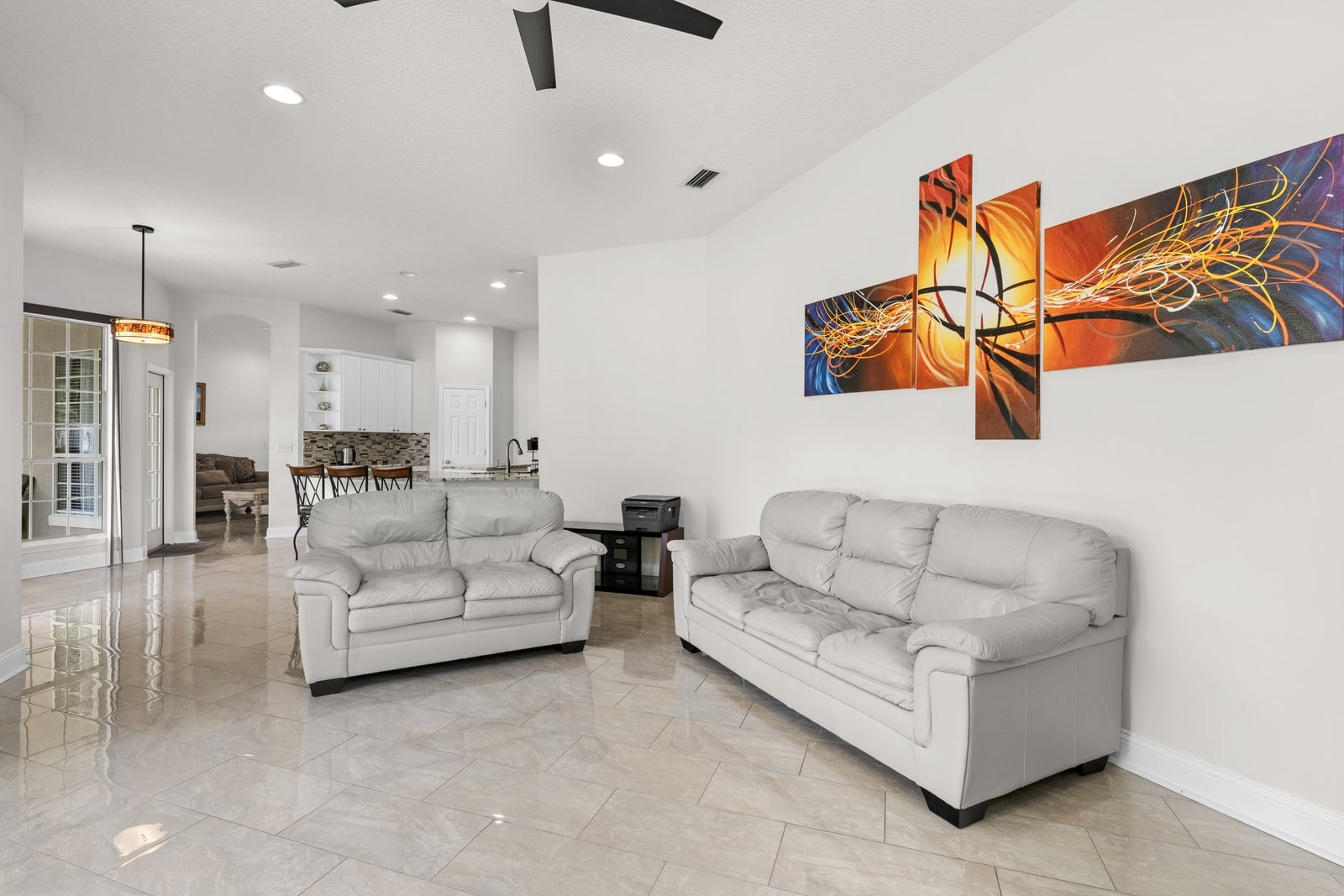
Landscape orientation, no watermark, no date stamp
Why professional real estate photos sometimes look fake
Worth understanding, because it is the line you do not want crossed on your listing.
Interior photography requires blending multiple exposures. Otherwise you get a properly exposed room with a pure white window, or a visible view with a black room. That is a technical necessity, not a manipulation.
The "fake" look comes from overdoing it: HDR pushed until shadows glow, saturation cranked, every surface lit with no directional light anywhere, interiors brighter than the window behind them. The result looks artificial, and it actively hurts you, because the buyer who shows up to a house that looks nothing like its photos feels misled before they reach the front door.
A good set of listing photos should look like the house on its best day. Not like a different house.
How long does a shoot take?
On site: 45 to 90 minutes for a typical residential property. Under 45 minutes for a small condo. Two hours or more for a large home with a pool, guest spaces or acreage. Adding a 3D tour puts roughly another 30 to 60 minutes on the visit.
Delivery: ask, and get it in writing. Editing is where the time goes, since properly blended and corrected images take 15 to 30 minutes each. Our standard is next business day.
Booking lead time: two to three business days is comfortable for most photographers.
Best time of day to shoot
Interiors want mid-morning to early afternoon, when there is plenty of ambient light but the sun is not driving hard shafts across the floor.
Exteriors are the one agents get wrong. The front of the house should be shot when the sun is on the façade, which depends entirely on which way the house faces. A north-facing front is in shadow most of the day and is best on an overcast day or in soft late light. A west-facing front wants late afternoon. A photographer who asks you which way the property faces before scheduling is a photographer who knows what they are doing.
Twilight gives the strongest single exterior image you can get, especially for waterfront and for homes with good landscape lighting. The actual window is about 20 minutes. Worth booking deliberately if the property warrants it.
How to make sure your files upload clean
Ask your photographer for three things:
- MLS-ready files, in the format your board accepts. Sized and named for direct upload, not full-resolution originals you have to resize yourself.
- No watermarks or branding, on any image.
- Virtual staging delivered labelled, if you ordered it.
If you get all three, uploading is drag-and-drop. If you do not, you are doing production work your photographer should have done.
We deliver MLS- and Zillow-ready files as standard, next business day, named and sized for direct upload.
One per agent: up to 5 HD photos, up to 5 drone images, 3D tour and floor plan.